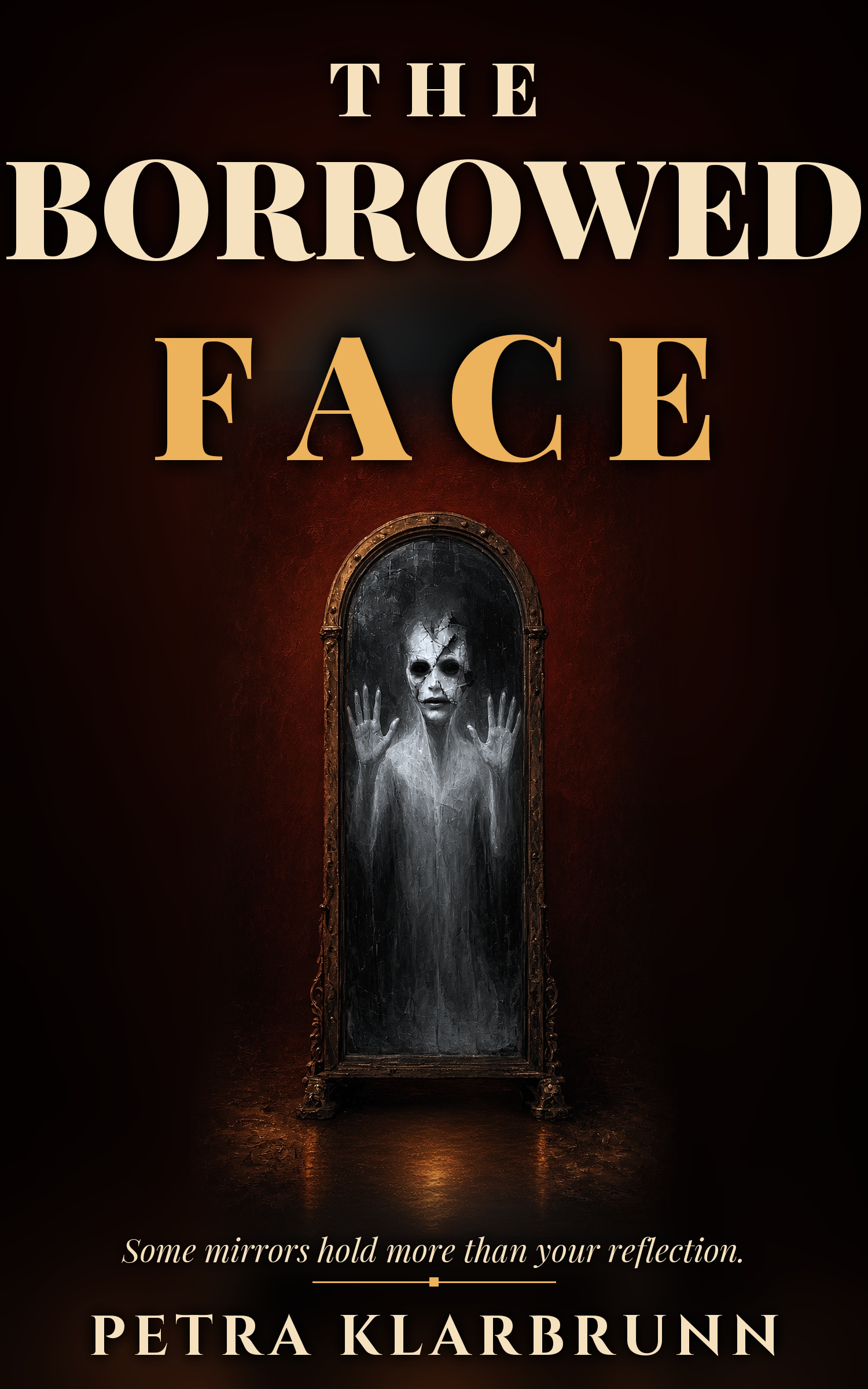
Coming Soon from Macabre Press
A mirror restorer. A stolen identity. A creature that sells grief back to you at a profit.
Mara Venn has spent years fixing glass for other people while keeping one mirror wrapped in cloth and pressed against her ribs. Inside it, her missing brother’s face appears just often enough to keep hope from dying. She has told herself she is not looking for proof. She has been lying.
When a dock porter arrives with a damaged pane from a shuttered amusement arcade and a reflection that is quietly erasing itself, Mara follows the evidence into the most dangerous kind of investigation: one where the clues are designed to find her.
Inside the arcade, the Glassman is waiting.
He keeps a careful ledger. Every stolen reflection is priced, described, and sold. The buyers pay in coin. The owners pay in something harder to name, the slow failure of recognition, the inability to describe their own face, the sensation of being present in a room that no longer holds them in its glass. Mara counts the losses in columns of figures and finds her brother’s name at the top of every page.
His likeness is the anchor. It is the first thing the creature ever took, the pane that powers every trade it has made since. And it is exactly as sharp and clear and heartbreaking as the morning he vanished.
To stop the Glassman, she will have to shatter it.
The Borrowed Face is an atmospheric horror novella written in the tradition of literary gothic fiction. Fans of quiet dread, gaslit mystery, and stories where the monster exploits what you love most will find themselves reading slowly, carefully, and with their backs to the nearest mirror.
Perfect for readers who enjoy:
- Atmospheric, literary horror with psychological depth
- Victorian and gaslit gothic settings
- Supernatural mysteries built on grief and identity
- Morally complex protagonists who think before they act
- Horror that earns its dread through character, not spectacle
Mara knows that an image is not a person. The hardest part is making herself believe it.